

16th May 2025 By Bridget O'Connell | bridget@propertyticker.co.nz | @propertyticker
Plans for a $3bn inland port in Otago have been unveiled, with the promise of boosting the export capacity of the country’s primary industries.
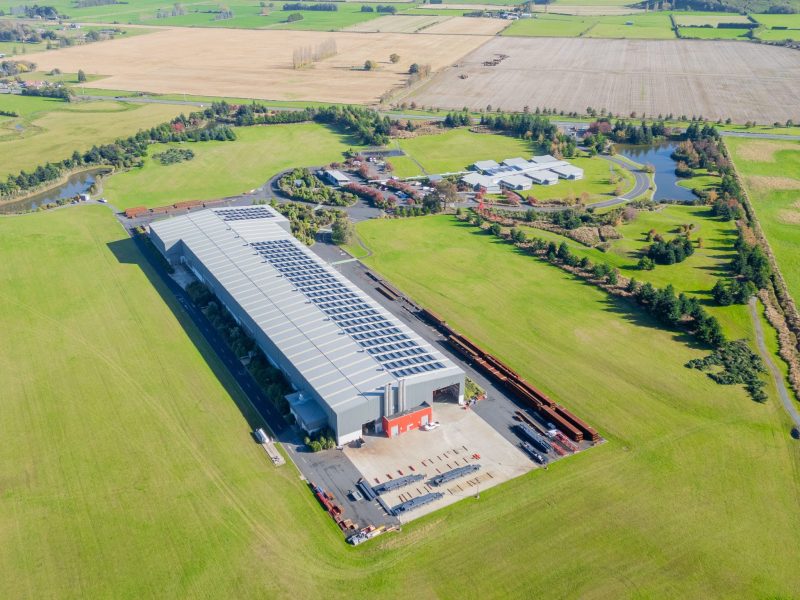
Privately owned construction company and landowner Calder Stewart has proposed the development of a 200-hectare inland port and industrial hub connected by rail to Port Otago.
The Milburn Quadrant development was being pitched as being able to act as a “pressure relief valve” to address capacity constraints at the region’s current port, located at Port Chalmers, by Calder Stewart land and delivery manager, Mark Johnston.
These capacity constraints had already triggered a search for alternative sites, with Milton Quadrant going up against Port Otago and Dynes Transport’s mooted establishment of an inland depot in Mosgiel. The proposed Mosgiel site is around 32km to Port Chalmers, while Milburn is 63km.
“Milburn is a shovel-ready, future-facing development that solves real capacity issues for our exporters,” Johnston said.
“It’s fully privately funded, so it won’t burden ratepayers and offers the scale and connectivity our regional economy urgently needs.
“With Port Chalmers facing container storage limits and the cost of upgrading alternate sites like Mosgiel projected at over $100m in public spending, Milburn offers a scalable, investment-ready solution designed to meet the growing needs of the Otago-Southland region, without placing an immediate burden on ratepayers or requiring upfront public funding.”
He added that the region was heading into a logistics bottleneck, with freight volumes from Central and South Otago forecast to grow 30% to 40% over the next decade, as forestry and dairy exports grew, meaning rising costs for exporters and increased road congestion

Calder Stewart said Milburn Quadrant could eliminate over 10,000 heavy truck movements per year by shifting volume to rail.
The company was seeking local government support to fast-track approvals, which would then be presented to central government officials and stakeholders in the coming weeks.
It had already completed Stage 1 of the project, a 10,000 square metre steel fabrication facility and campus with offices at Revolution Hills, northeast of Milton.
The developer added that all new buildings at Milburn Quadrant would include rooftop solar generation, funded and installed by Calder Stewart Energy.
“Port Chalmers is approaching logistical constraints, particularly around container storage and log volume. A delay in new inland capacity risks bottlenecking exports and eroding competitiveness,” said John D’Arcy, lower South Island business development manager of Property for Calder Stewart.
“This is about real economic transformation, securing long-term freight capacity, creating hundreds of jobs, and easing the pressure on urban roads and infrastructure.
“Milton is strategically positioned closer to the region’s agricultural producers, where the bulk of freight originates. That’s where rail delivers the greatest benefit, with both carbon and cost efficiency improving over distance. It’s a smarter, more sustainable hub for Southland and Central Otago producers.
“What we need right now is visibility, political backing and certainty around regulatory timelines. With the right support, we can secure council approvals and ensure the public understands the scale and value of what’s being built here.”
Subscribe to The Yield newsletter. Get the latest commercial property news and insights delivered to your inbox every morning.

